
“PRUDEN: Britain's taste of hopey-changey” plus 3 |

- PRUDEN: Britain's taste of hopey-changey
- Old Blighty gets a taste of hopey-changey time
- Revisiting Support Services Contracts Can Cut Costs
- Is Stephen Hawking right about aliens?
| PRUDEN: Britain's taste of hopey-changey Posted: 04 May 2010 01:22 AM PDT ANALYSIS/OPINION: Britain gave us Twiggy (remember her?) and the Beatles, and this week it's payback time. We're returning the favor with the slap and dash of an American presidential election. Old Blighty is awash in endless public-opinion polls, televised debates taking the measure of the candidates' cosmetics, celebrity endorsements, dramatic gaffes and a media-manufactured cry for some of Barack Obama's hopey-changey. The three-way race ends Thursday, when voters in England, Scotland, Wales and Northern Ireland decide whether to sack Gordon Brown and the Labor Party and, if so, whether to replace him with David Cameron and the Conservatives or Nick Clegg and the Liberal Democrats. The late polls show the Conservatives out front and inching toward a slender majority. Mr. Clegg and the Liberal Democrats are trying to run in the shrinking shadow of President Obama, with Mr. Clegg quoting the president endlessly and inviting deferential comparisons, but in the end, he may be remembered by the political junkies and groupies only as a British equivalent of Ross Perot or John Anderson, someone who briefly tickled the body politic and then disappeared on the first post-election breeze. Britain, like America, has come on hard times in the search for a bold, strong leader with an understanding of the tides of history and an appreciation of what it takes to master those tides. Anyone looking for Maggie Thatcher on the English hustings will be as disappointed as someone who looked for a Harry Truman or Ronald Reagan in America two years ago. But for the Thatcher interlude, British voters have been looking for a way to retreat into "Little England" for years, many of them imagining that playing second fiddle to the Germans and the French would make sweet music rain down on Europe. Nick Clegg, an unlikely Englishman, appeals to the British voters who yearn to be European and want Britain to move into a closer embrace of the bureaucrats in Brussels. Mr. Clegg's ancestry is Dutch and Russian; his wife is Spanish, and their three children have Spanish names. It's impolite to mention Trafalgar at the Clegg dinner table. Because there's no Hollywood in "the sceptr'd isle," Mr. Clegg's coterie of glam endorsers must be recruited elsewhere. The list includes actor Colin Firth, celebrity ex-wife Bianca Jagger and Richard Dawkins, the scientist trying to be the Billy Graham of atheism. Despite such star power, Mr. Clegg is fading, like Ross Perot in America, as the election approaches and reality intrudes, as it inevitably does. With the election just 72 hours away, Mr. Clegg is sounding a loser's lament: "David Cameron, with breathtaking arrogance, is already measuring up the curtains for No. 10 Downing Street, before you have even voted." As unlikely an Englishman as Nick Clegg may be, David Cameron is the perfect extrusion of soft damp plastic. He's a one-time public-relations executive, the son of wealthy parents, and exudes the rehearsed sincerity of the manufactured politician. Continuing the American campaign model, he offers "key Conservative goals" of cleaning up politics, encouraging economic growth and resolving "social problems." Who could argue with that? Naturally, he calls this his "Contract With Voters." Newt Gingrich and the Republicans may have a credible copyright-infringement lawsuit. Gordon Brown scoffs that such a "contract" is just clever rhetoric — a "con trick" — but the prime minister is still reeling from his off-camera but on-microphone description of a nice widow, who asked him a question about immigration, as a "bigoted woman." The nice widow was actually talking about blue-eyed Polish immigrants taking jobs she thinks blue-eyed Englishmen should have, but "bigot" has become the all-purpose default epithet applied to anyone who dissents from the politically correct, and Mr. Brown, a practicing Presbyterian, is paying the price. He went to the widow's home to deliver his apology as "a penitent sinner," but the damage was done. If there's no clear parliamentary majority after the Thursday vote, there will be what the British call "a hung Parliament," and the prime minister from whatever coalition can be put together will hold a weakened hand. This, some analysts suggest, will further weaken the "special relationship" between the Americans and the British forged during World War II and continued during the Cold War. This is the special relationship gleefully damaged by Mr. Obama in his first days in the White House, when he made a point of sending home a borrowed bust of Winston Churchill that had been displayed prominently in the White House for decades. But the bond between "a common people divided by a common language" is likely to survive mere elections. It always has. • Wesley Pruden is editor emeritus of The Washington Times. Five Filters featured article: The Art of Looking Prime Ministerial - The 2010 UK General Election. Available tools: PDF Newspaper, Full Text RSS, Term Extraction. | |
| Old Blighty gets a taste of hopey-changey time Posted: 04 May 2010 12:21 AM PDT
| Jewish World Review May 4, 2010 / 20 Iyar 5770 Old Blighty gets a taste of hopey-changey time
By
Wesley Pruden
http://www.JewishWorldReview.com |
Britain gave us Twiggy (remember her?) and the Beatles and this week it's payback time. We're returning the favor with the slap and dash of an American presidential election. Old Blighty is awash in endless public-opinion polls, televised debates taking the measure of the candidates' cosmetics, celebrity endorsements, dramatic gaffes and a media-manufactured cry for some of Barack Obama's hopey-changey.
The three-way race ends Thursday when voters in England, Scotland, Wales and Northern Ireland decide whether to sack Gordon Brown and the Labor Party, and if so whether to replace him with David Cameron and the Conservatives or Nick Clegg and the Liberal Democrats. The late polls show the Conservatives out front and inching toward a slender majority.
Mr. Clegg and the Liberal Democrats are trying to run in the shrinking shadow of President Obama, with Mr. Clegg quoting the president endlessly and inviting deferential comparisons, but in the end he may be remembered by the political junkies and groupies only as a British equivalent of Ross Perot or John Anderson, someone who briefly tickled the body politic and then disappeared on the first post-election breeze.
Britain, like America, has come on hard times in the search for a bold, strong leader with an understanding of the tides of history and an appreciation of what it takes to master those tides. Anyone looking for Maggie Thatcher on the English hustings will be as disappointed as someone who looked for a Harry Truman or Ronald Reagan in America two years ago.
But for the Thatcher interlude, British voters have been looking for a way to retreat into "Little England" for years, many of them imagining that playing second fiddle to the Germans and the French would make sweet music rain down on Europe. Nick Clegg, an unlikely Englishman, appeals to the British voters who yearn to be European, and want Britain to move into a closer embrace of the bureaucrats in Brussels. Mr. Clegg's ancestry is Dutch and Russian; his wife is Spanish and their three children have Spanish names. It's impolite to mention Trafalgar at the Clegg dinner table.
Since there's no Hollywood in "the sceptr'd isle," Mr. Clegg's coterie of glam endorsers must be recruited elsewhere. The list includes actor Colin Firth, celebrity ex-wife Bianca Jagger and Richard Dawkins, the scientist trying to be the Billy Graham of atheism. Despite such star power, Mr. Clegg is fading, like Ross Perot in America, as the actual election approaches and reality intrudes, as it inevitably does. With the election only 72 hours away, Mr. Clegg is sounding a loser's lament: "David Cameron, with breathtaking arrogance, is already measuring up the curtains for No. 10 Downing Street, before you have even voted."
As unlikely an Englishman as Nick Clegg may be, David Cameron is the perfect extrusion of soft damp plastic. He's a onetime public-relations executive, the son of wealthy parents, and exudes the rehearsed sincerity of the manufactured politician. Continuing the American campaign model, he offers "key Conservative goals" of cleaning up politics, encouraging economic growth and resolving "social problems." Who could argued with that? Naturally he calls this his "Contract With Voters." Newt Gingrich and the Republicans may have a credible copyright infringement law suit.
Gordon Brown scoffs that such a "contract" is just clever rhetoric — a "con trick" — but the prime minister is still reeling from his off-camera but on-microphone description of a nice widow, who asked him a question about immigration, as a "bigot." The nice widow was actually talking about blue-eyed Polish immigrants taking jobs she thinks blue-eyed Englishmen should have, but "bigot" has become the all-purpose default epithet applied to anyone who dissents from the politically correct, and Mr. Brown, a practicing Presbyterian, is paying the price. He went to the widow's home to deliver his apology as "a penitent sinner," but the damage was done.
If there's no clear parliamentary majority after the Thursday vote there will be what the British call "a hung Parliament," and the prime minister from whatever coalition can be put together will hold a weakened hand. This, some analysts suggest, will further weaken the "special relationship" between the Americans and the British forged during World War II and continued during the Cold War. This is the special relationship gleefully damaged by Barack Obama in his first days in the White House, when he made a point of sending home a borrowed bust of Winston Churchill that had been prominently displayed in the White House for decades. But the bond between "a common people divided by a common language" is likely to survive mere elections. It always has.
Every weekday JewishWorldReview.com publishes what many in in the media and Washington consider "must-reading". Sign up for the daily JWR update. It's free. Just click here.
JWR contributor Wesley Pruden is editor emeritus of The Washington Times. Comment by clicking here.
© 2007 Wesley Pruden
Five Filters featured article: The Art of Looking Prime Ministerial - The 2010 UK General Election. Available tools: PDF Newspaper, Full Text RSS, Term Extraction. |
| Revisiting Support Services Contracts Can Cut Costs Posted: 03 May 2010 07:50 PM PDT  Colin Anderson, Getty Images Let it be. The Beatles certainly thought that was a good idea. However, given the state of today's economy, shaking things up instead of maintaining the status quo can be a great financial decision for a law firm. That's what you should do with your facilities management operation -- shake things up -- it can pay off in a big way. Since the economy has been struggling, many firms are realizing that they might get more favorable pricing and terms if they investigate all the options available to them; because vendors are hungry for business and their current providers want to keep them as clients. One of the most reliable ways to get the best deal is to embark on an open Request for Proposal for support services. Introducing a competitive environment drives prices down and motivates vendors to throw in perks that definitely add up in your favor. Before creating your RFP, or the precursor Request for Information, you'll want to check out the "going rates" for these services to find out how much bargaining leverage you will have. Take a preliminary look at your incumbent vendors' costs, and also examine your print needs and usage to streamline your entire facilities management operation. Strongly consider obtaining a benchmark study from a reputable consulting firm to determine how your firm's current vendors, as well as your equipment and staffing, stack up against pricing you can expect to obtain from other companies. Examine pricing for all the areas that are included in your facilities management department, such as office support, mail delivery, reprographics, hospitality services, facsimile services, office supply inventory management, courier services, and reception services. Analyze which machines you are overutilizing and underutilizing. Perhaps you have more machines than you really need, or certain machines are being overtaxed to the point of breaking down frequently. You can also determine whether you want to consolidate support services with a single vendor, or if you would prefer to use a more decentralized approach with a number of different vendors. Keep in mind that having a single vendor can reduce your management variables, giving you "one throat to choke," so to speak. OPEN RFP Once you have an accurate benchmark price, you can then embark on an open RFP. "Open" means that your current vendor(s) will need to compete alongside other vendors to win your business. First, you can send an RFI to a large number of vendors. After the RFI is returned and you apply selection criteria, you can narrow that list down to about four to six vendors and send them your RFP. Once you receive back the RFP responses, you'll want to do a side-by-side, apples-to-apples comparison of each vendor's capabilities. This comparative report can detail items that are important to you, such as geographic reach, capabilities of each vendor in specific areas, and how they would be able to respond to each condition of your contract. Based on this comparison, you can then reduce the field to two or three finalists and invite them onsite to present their capabilities. From those presentations, you can then make your final decision. Keep in mind that there is sometimes an advantage to sticking with an incumbent vendor; you have an existing relationship and know its parameters, as well as the vendors procedures and culture. However, if the financial advantage to switching to a new vendor is overwhelming or if you feel they make a much stronger case to benefit your firm, there is no reason not to hire a new provider. At this point, you can either edit the previous contract or create a new contract from scratch. You can make sure that new equipment and technology are included in the new contract so you can modernize your firm in the process. Ideally, you'll be able to save money and get new equipment in the process -- that is a minimum expectation in these economic times. When you're undergoing contract negotiations, consider requiring your vendor to provide a guaranteed savings each year, meaning they agree to reimburse you if you don't save the projected amount over the entire contract term. Also, be sure to build flexibility into the agreement, so you can switch out equipment and personnel without penalty. Facilities management can be a tedious, complicated process and sometimes it seems easier to leave things as they are rather than trying to make dramatic improvements. The amount of data that needs to be tracked and captured to make such changes can be overwhelming. However, taking a calculated risk and engaging an open RFP can really pay off for you and your firm. You can get modern technology, centralized management, and streamlined workflow, as well as save a lot of money. CONCLUSION Sometimes it's not a good idea to let it be. Change can be a good thing -- especially if the result is greater efficiency, cutting-edge technology, and cost savings. At your next opportunity, consider going out for an open RFP. You really have nothing to lose -- and a whole lot to gain! Robert Mattern is president and founder of Mattern and Associates and author of the Mattern of Fact blog. Five Filters featured article: The Art of Looking Prime Ministerial - The 2010 UK General Election. Available tools: PDF Newspaper, Full Text RSS, Term Extraction. | |
| Is Stephen Hawking right about aliens? Posted: 04 May 2010 02:53 AM PDT 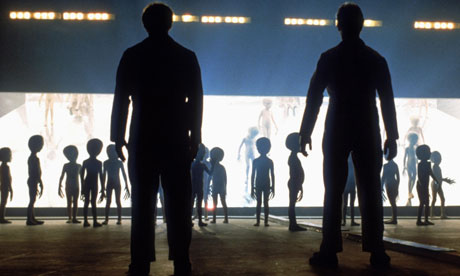 Close enough? A scene from Close Encounters of the Third Kind. Photograph: Allstar/COLUMBIA/Sportsphoto Ltd./Allstar In February 2008, Nasa sent the Beatles song, Across the Universe, across the universe. Pointing the telescopes in its Deep Space Network towards the north star, Polaris, astronomers played out their short cosmic DJ set, hoping that it might be heard by intelligent aliens during its 430-year journey to the star. The hunt for intelligent species outside Earth may be a staple of literature and film – but it is happening in real life, too. Nasa probes are on the lookout for planets outside our solar system, and astronomers are carefully listening for any messages being beamed through space. How awe-inspiring it would be to get confirmation that we are not alone in the universe, to finally speak to an alien race. Wouldn't it? Well no, according to the eminent physicist Stephen Hawking. "If aliens visit us, the outcome would be much as when Columbus landed in America, which didn't turn out well for the Native Americans," Hawking has said in a forthcoming documentary made for the Discovery Channel. He argues that, instead of trying to find and communicate with life in the cosmos, humans would be better off doing everything they can to avoid contact. Hawking believes that, based on the sheer number of planets that scientists know must exist, we are not the only life-form in the universe. There are, after all, billions and billions of stars in our galaxy alone, with, it is reasonable to expect, an even greater number of planets orbiting them. And it is not unreasonable to expect some of that alien life to be intelligent, and capable of interstellar communication. So, when someone with Hawking's knowledge of the universe advises against contact, it's worth listening, isn't it? Seth Shostak, a senior astronomer at the Seti Institute in California, the world's leading organisation searching for telltale alien signals, is not so sure. "This is an unwarranted fear," Shostak says. "If their interest in our planet is for something valuable that our planet has to offer, there's no particular reason to worry about them now. If they're interested in resources, they have ways of finding rocky planets that don't depend on whether we broadcast or not. They could have found us a billion years ago." If we were really worried about shouting in the stellar jungle, Shostak says, the first thing to do would be to shut down the BBC, NBC, CBS and the radars at all airports. Those broadcasts have been streaming into space for years – the oldest is already more than 80 light years from Earth – so it is already too late to stop passing aliens watching every episode of Big Brother or What Katie and Peter Did Next. The biggest and most active hunt for life outside Earth started in 1960, when Frank Drake pointed the Green Bank radio telescope in West Virginia towards the star Tau Ceti. He was looking for anomalous radio signals that could have been sent by intelligent life. Eventually, his idea turned into Seti (standing for Search for Extra Terrestrial Intelligence), which used the downtime on radar telescopes around the world to scour the sky for any signals. For 50 years, however, the sky has been silent. There are lots of practical problems involved in hunting for aliens, of course, chief among them being distance. If our nearest neighbours were life-forms on the (fictional) forest moon of Endor, 1,000 light years away, it would take a millennium for us to receive any message they might send. If the Endorians were watching us, the light reaching them from Earth at this very moment would show them our planet as it was 1,000 years ago; in Europe that means lots of fighting between knights around castles and, in north America, small bands of natives living on the great plains. It is not a timescale that allows for quick banter – and, anyway, they might not be communicating in our direction. The lack of a signal from ET has not, however, prevented astronomers and biologists (not to mention film-makers) coming up with a whole range of ideas about what aliens might be like. In the early days of Seti, astronomers focused on the search for planets like ours – the idea being that, since the only biology we know about is our own, we might as well assume aliens are going to be something like us. But there's no reason why that should be true. You don't even need to step off the Earth to find life that is radically different from our common experience of it. "Extremophiles" are species that can survive in places that would quickly kill humans and other "normal" life-forms. These single-celled creatures have been found in boiling hot vents of water thrusting through the ocean floor, or at temperatures well below the freezing point of water. The front ends of some creatures that live near deep-sea vents are 200C warmer than their back ends. "In our naive and parochial way, we have named these things extremophiles, which shows prejudice – we're normal, everything else is extreme," says Ian Stewart, a mathematician at Warwick University and author of What Does A Martian Look Like? "From the point of view of a creature that lives in boiling water, we're extreme because we live in much milder temperatures. We're at least as extreme compared to them as they are compared to us." On Earth, life exists in water and on land but, on a giant gas planet, for example, it might exist high in the atmosphere, trapping nutrients from the air swirling around it. And given that aliens may be so out of our experience, guessing motives and intentions if they ever got in touch seems beyond the realm's even of Hawking's mind. Paul Davies, an astrophysicist at Arizona State University and chair of Seti's post-detection taskforce, argues that alien brains, with their different architecture, would interpret information very differently from ours. What we think of as beautiful or friendly might come across as violent to them, or vice versa. "Lots of people think that because they would be so wise and knowledgeable, they would be peaceful," adds Stewart. "I don't think you can assume that. I don't think you can put human views on to them; that's a dangerous way of thinking. Aliens are alien. If they exist at all, we cannot assume they're like us." Answers to some of these conundrums will begin to emerge in the next few decades. The researchers at the forefront of the work are astrobiologists, working in an area that has steadily marched in from the fringes of science thanks to the improvements in technology available to explore space. Scientists discovered the first few extrasolar planets in the early 1990s and, ever since, the numbers have shot up. Today, scientists know of 443 planets orbiting around more than 350 stars. Most are gas giants in the mould of Jupiter, the smallest being Gliese 581, which has a mass of 1.9 Earths. In 2009, Nasa launched the Kepler satellite, a probe specifically designed to look for Earth-like planets. Future generations of ground-based telescopes, such as the proposed European Extremely Large Telescope (with a 30m main mirror), could be operational by 2030, and would be powerful enough to image the atmospheres of faraway planets, looking for chemical signatures that could indicate life. The Seti Institute also, finally, has a serious piece of kit under construction: the Allen Array (funded by a $11.5m/£7.5m donation from Microsoft co-founder Paul Allen) has, at present, 42 radio antennae, each six metres in diameter, but there are plans, if the Seti Institute can raise another $35m, to have up to 300 radio dishes. In all the years that Seti has been running, it has managed to look carefully at less than 1,000 star systems. With the full Allen Array, they could look at 1,000 star systems in a couple of years. Shostak is confident that, as telescope technology keeps improving, Seti will find an ET signal within the next two decades. "We will have looked at another million star systems in two dozen years. If this is going to work, it will work soon." And what happens if and when we detect a signal? "My strenuous advice will be that the coordinates of the transmitting entity should be kept confidential, until the world community has had a chance to evaluate what it's dealing with," Davies told the Guardian recently. "We don't want anybody just turning a radio telescope on the sky and sending their own messages to the source." But his colleague, Shostak, says we should have no such concerns. "You'll have told the astronomical community – that's thousands of people. Are you going to ask them all not to tell anybody where you're pointing your antenna? There's no way you could do that. "And anyway, why wouldn't you tell them where [the alien lifeform] is? Are you afraid people will broadcast their own message? They might do that but, remember, The Gong Show has already been broadcast for years." And, for that matter, the Beatles. Five Filters featured article: The Art of Looking Prime Ministerial - The 2010 UK General Election. Available tools: PDF Newspaper, Full Text RSS, Term Extraction. |

| You are subscribed to email updates from Yahoo! News Search Results for beatles To stop receiving these emails, you may unsubscribe now. | Email delivery powered by Google |
| Google Inc., 20 West Kinzie, Chicago IL USA 60610 | |

0 comments:
Post a Comment